



Testing & Certification Services
Select a section from the left menu to view the available documents.
An essential requirement to bring products to market. It governs the design and manufacture of electrical and electronic equipment and components to prevent hazards to health and the safety of people, domestic animals, and property, as required by international regulation.
Main Directives and Standards
- Directive 2014/35/EU on low voltage (Low Voltage Directive)
- Directive 2006/42/EC on machinery
- Directive 2009/125/EC and Regulation (EU) 2017/1369 on ecodesign and energy labelling
- Directive 2009/48/EC on the safety of toys
Climatic and corrosion testing is essential to ensure that equipment and components withstand extreme or variable environmental conditions and maintain their performance, reliability, integrity, and safety over time. These tests help predict service life and validate the effectiveness of materials and anti-corrosion treatments against natural or accelerated degradation.
Main Directives and Standards
- Directive 2014/35/EU on low voltage
- Directive 2006/42/EC on machinery
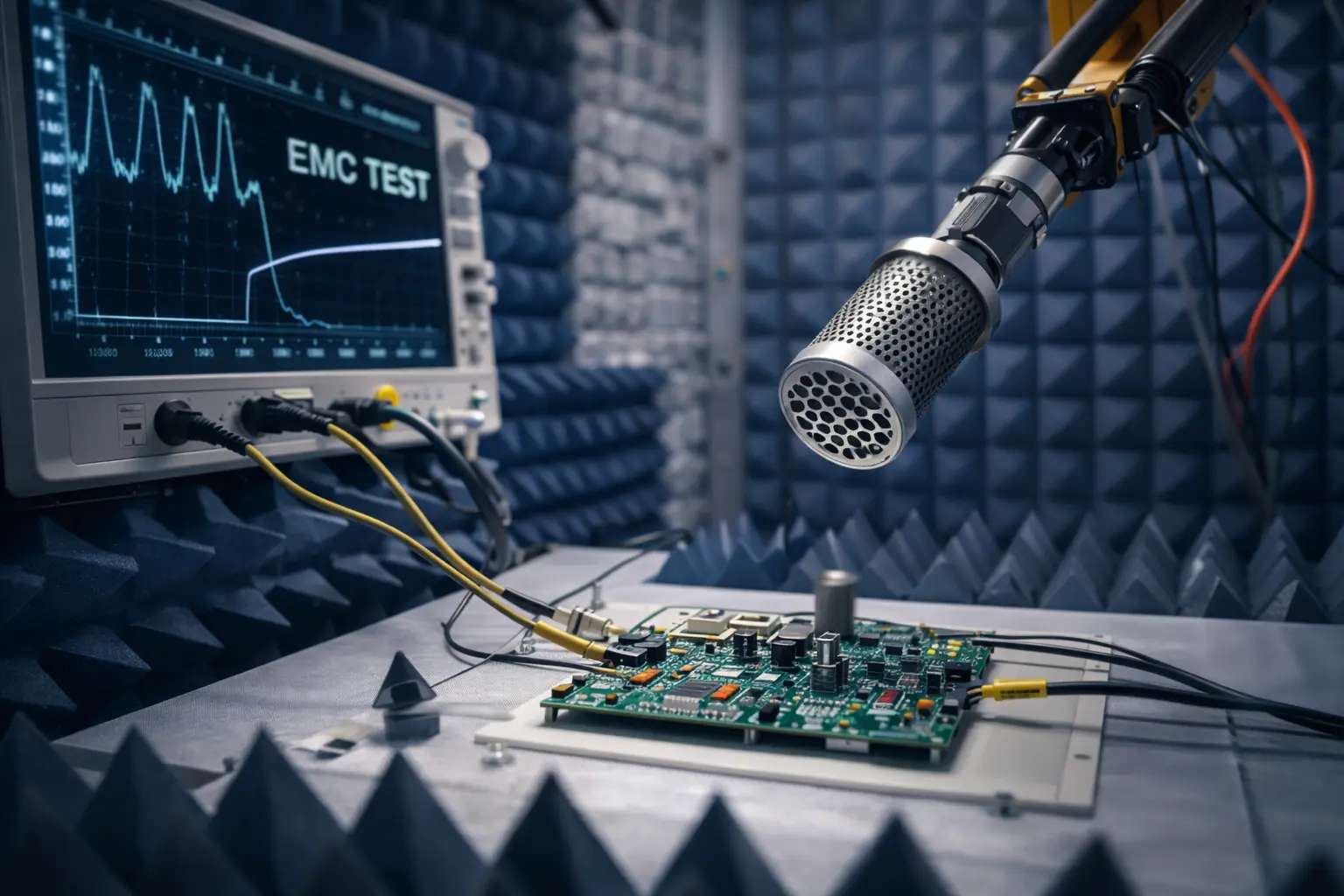
Electromagnetic Compatibility testing is essential to ensure that an electrical or electronic device, equipment, or system can operate correctly in its electromagnetic environment without causing intolerable interference to other equipment or being affected by it.
Main Directives and Standards
- Directive 2014/30/EU on electromagnetic compatibility (EMC Directive)
Our services cover the spectrum from 9 kHz to 18 GHz, ensuring compliance with the standards during the critical validation stages of chambers, technical rooms, or shelters. We guarantee that your facilities or products deliver precise, known, and rigorously documented electromagnetic attenuation.
Measurements can be carried out at our facilities or on-site at the client's premises.
Main Directives and Standards
- Directive 2014/30/EU on electromagnetic compatibility
Throughout their service life, equipment is subjected to weathering, vibration, and shocks arising from operation, transport, or even vandalism. These tests assess the equipment's ability to withstand physical stress (during transport, installation, or use) and ensure protection against weather and unauthorised access. They verify that no breakage, misalignment, internal disconnection, or functional degradation occurs, and that the equipment maintains its safety and functionality under adverse environmental conditions.
Main Directives and Standards
- Directive 2014/35/EU on low voltage
- Directive 2006/42/EC on machinery
Automotive and rail are complex environments where testing requires high precision and robustness. Each manufacturer (OEM) demands its own severity levels, which calls for deep sector expertise.
The range of automotive tests must cover conventional vehicles (12/24 V), high-voltage testing (60-1500 Vdc), and the latest mild-hybrid systems (48 V) with their variants. In rail, compliance with the requirements of major national and international operators and managers.
Main Standards
Our electromobility services cover regulatory testing (IEC 61851-1 and 61851-23), OCPP validation for versions 1.6, 2.0.1 and 2.1.0, Annex A and B validation per IEC 61851-1, functional validation, and test automation.
Main Standards
Military standards are highly specific and focus on reproducing the most extreme real-world conditions. They identify the operational environment, stress factors, and so on, adapting to the actual life cycle of each item by defining a range of test methods. The variety of tests covered by these standards is very broad.
Main Standards
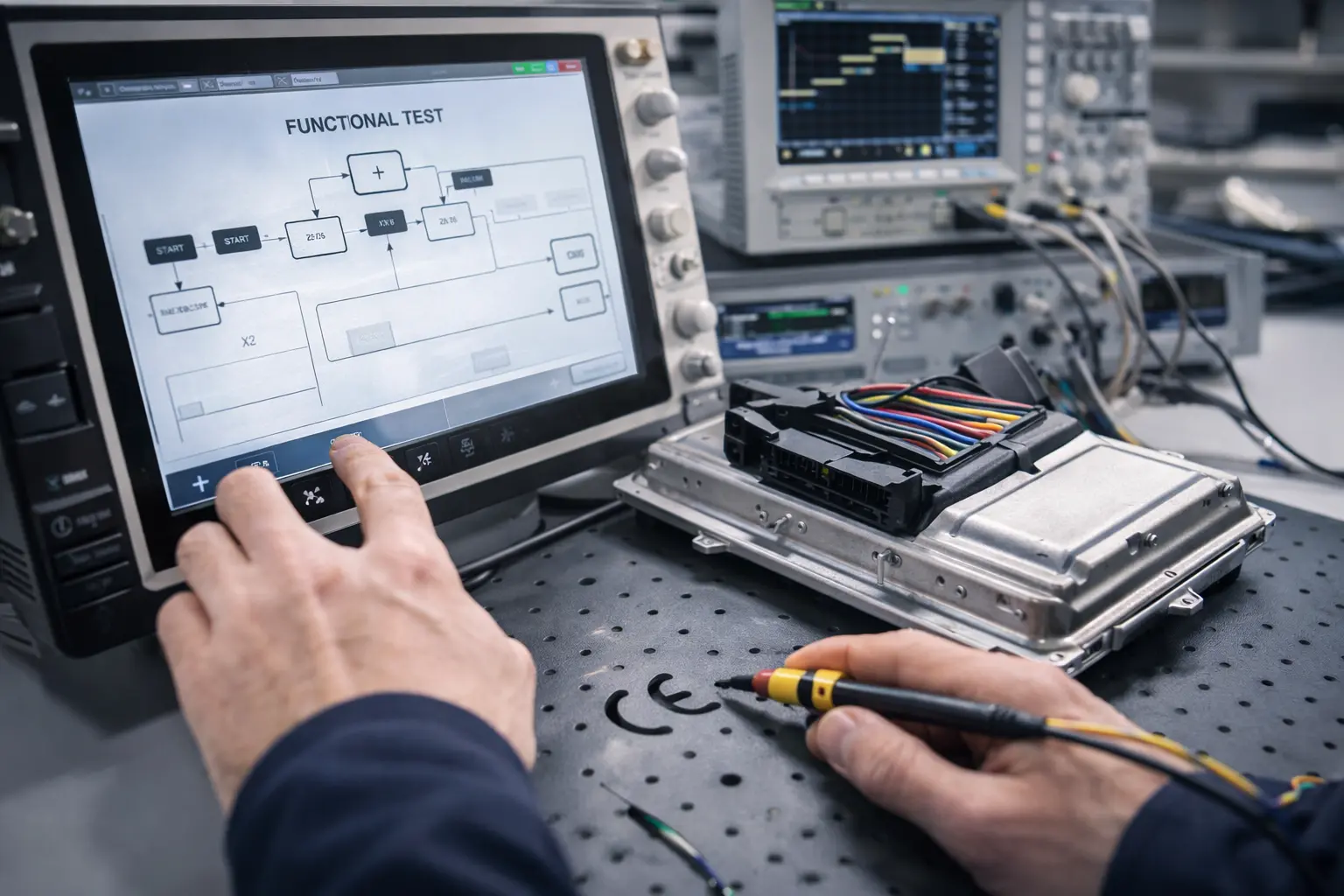
Acceptance testing verifies that the product meets the defined criteria before delivery or production. We design and run tests that confirm the product behaves as expected against the agreed functional requirements, reducing risks in later phases.
We validate that the product requirements are complete, consistent and verifiable from the start of the project. We translate specifications into concrete test criteria so each requirement can be checked objectively during validation.
We automate repetitive tests and test sequences using custom benches and scripts. Automation increases the repeatability of results, reduces execution time and lets us validate the product under a large number of conditions in a controlled way.
We have a mobile device infrastructure to validate the behaviour of apps and connected products across multiple models, operating systems and versions. It helps detect incompatibilities and performance issues under real usage conditions.
We support the product from the early design stages, integrating regulatory and testing requirements before the design is frozen. Anticipating these requirements reduces rework, costs and delays in the validation and certification phases.
We help you identify which directives, requirements and obligations apply to your product based on its intended use and target market. We provide technical judgement to interpret the regulation and define the most suitable compliance path.
We support importers and exporters in meeting the requirements of the European and non-EU markets. We review the technical documentation and compliance evidence needed to avoid incidents, blocks or customs holds.
We prepare and structure the product's technical file with all the required documentation: description, risk analysis, test reports, schematics and compliance evidence. A well-built file makes the declaration of conformity and CE marking straightforward.
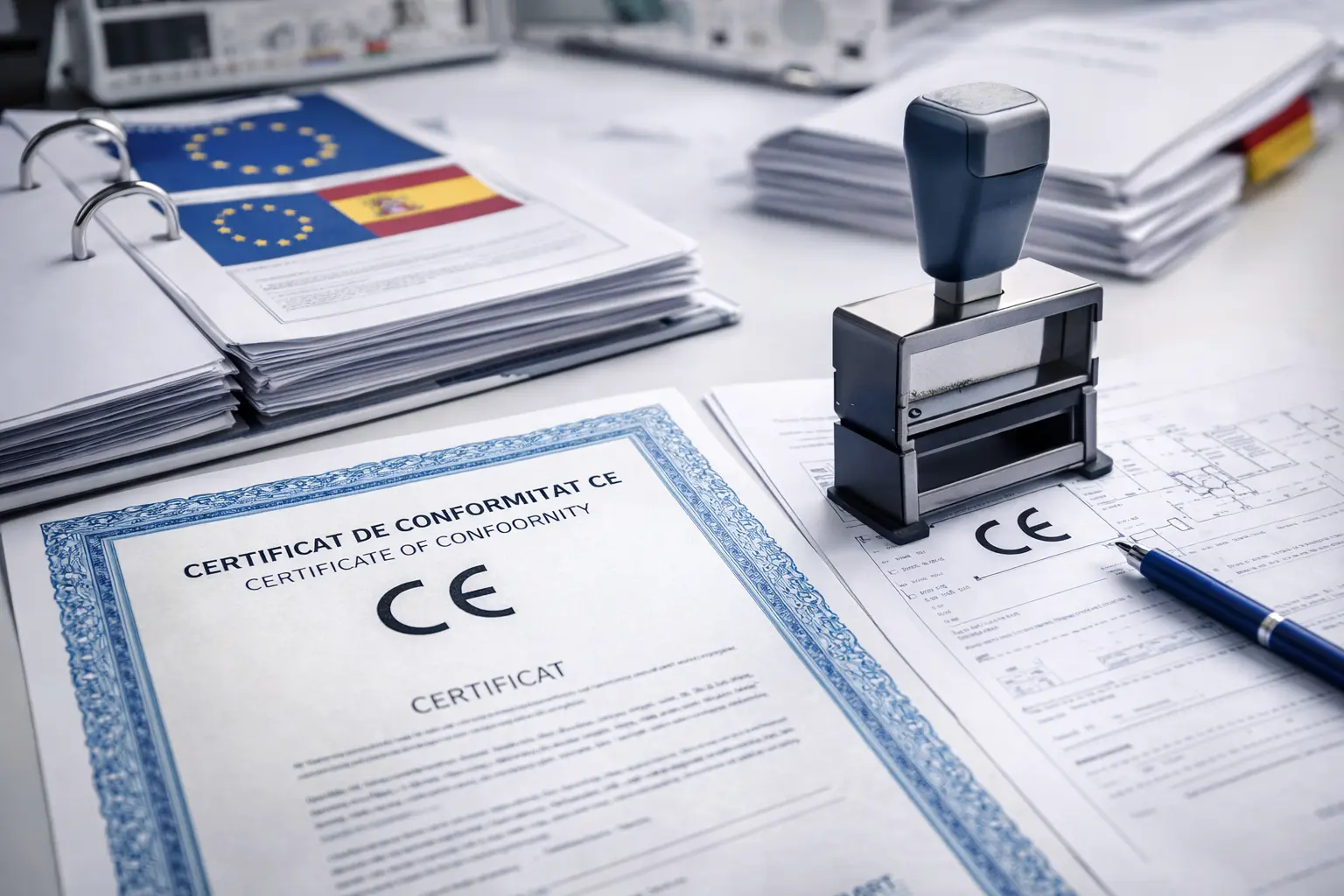
We help you draft the EU declaration of conformity, the document through which the manufacturer states that the product complies with the applicable legislation. We check that the referenced directives, standards and data are correct and consistent with the technical file.
We guide you through the entire CE marking process: identification of applicable directives, required testing, technical file and declaration of conformity. The goal is for the product to be placed on the European market with full guarantees.